
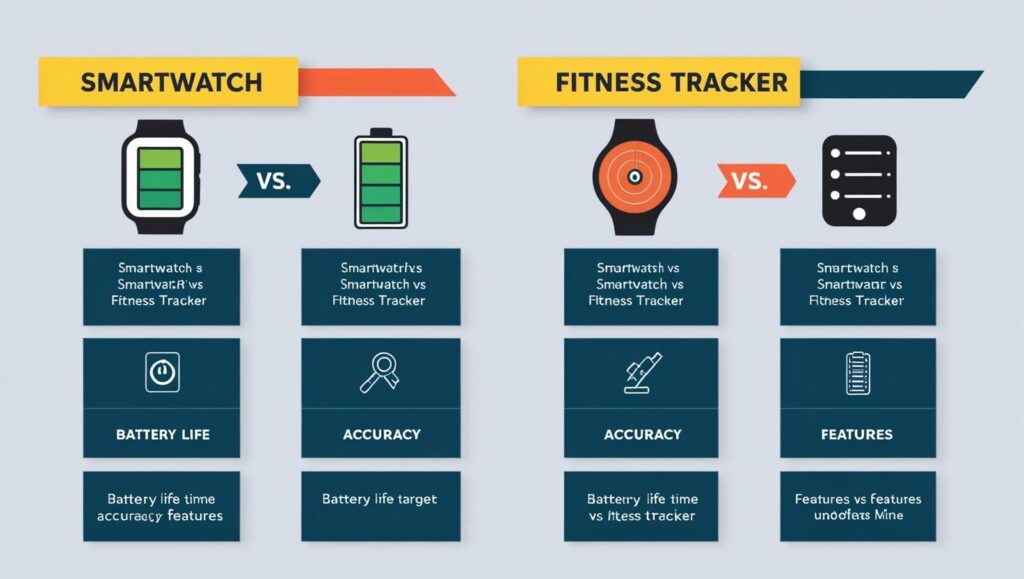
Updated for 2026. You’re on a morning run, heart pounding, and on your wrist sits your trusty fitness companion. But is it a fitness tracker or a smartwatch? And more to the point — is it actually helping you get healthier, or just collecting numbers you never look at?
The honest answer is that the gap between these two categories has narrowed dramatically. Choosing well in 2026 is less about the label on the box and more about battery life, which metrics you’ll actually act on, and how much you want a screen buzzing at you all day.
The real difference (and why it’s shrinking)
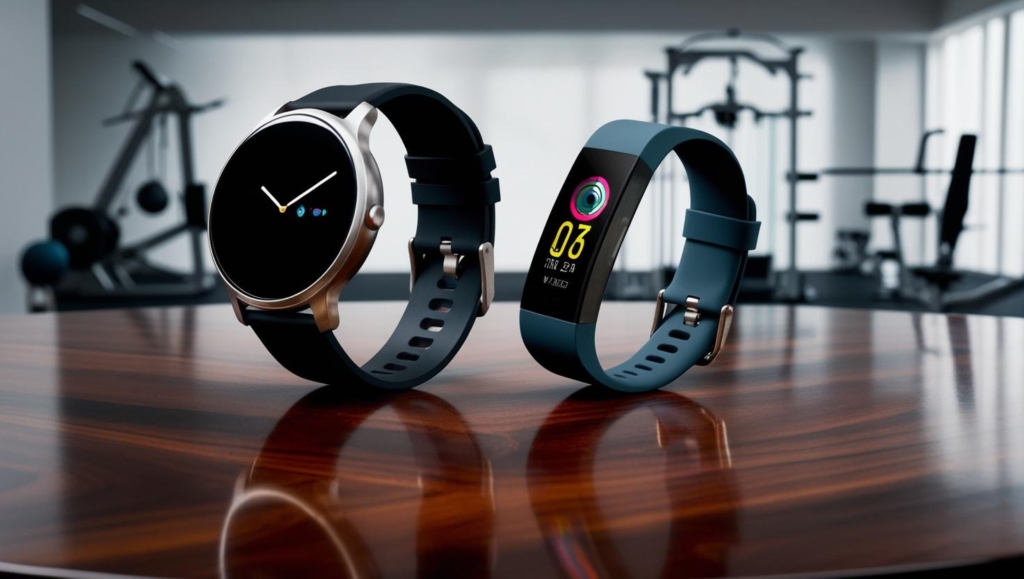
A fitness tracker is built around one job: recording what your body does. A smartwatch is a small computer that also happens to do that. That was a clean distinction five years ago.
It isn’t anymore. Modern trackers like the Fitbit Charge 6 carry ECG, SpO2 and on-wrist GPS — features that used to justify the smartwatch premium. Meanwhile smartwatches have quietly fixed their worst flaw: multi-day battery is now normal on Garmin, and even Apple’s Ultra line runs for days rather than hours.
So the question has shifted. It’s no longer “which one tracks more?” — it’s “how much device do you want on your wrist, and will you charge it?”
Accuracy: what these devices measure well — and badly
This is the part most comparisons skip, and it matters more than any feature list. Not all the numbers on your wrist deserve equal trust.
- Steps — reliable enough. Expect a small margin of error either way. Fine for spotting trends, not worth agonising over day to day.
- Resting and steady-state heart rate — good. Wrist optical sensors handle a steady jog or a resting reading well.
- Interval and lifting heart rate — weaker. Rapid spikes, wrist flexion and a loose strap all degrade optical readings. If heart-rate zones genuinely drive your training, a chest strap remains the more accurate tool — and most watches will pair with one.
- Sleep stages — directionally useful. Good at total sleep time, far shakier at splitting deep versus REM. Track the trend, not last night’s breakdown.
- Calorie burn — the least trustworthy number on the device. It’s an estimate built on other estimates. Use it as a relative signal (harder week versus easier week), never as a budget to eat back.
If you want a calorie figure worth planning meals around, calculate it properly rather than reading it off a wrist: our TDEE calculator gives you a far more defensible starting point, and the BMR calculator shows what you burn at rest.
Battery life and daily comfort

Battery is the single biggest predictor of whether a device still gets worn in month three. A watch that needs nightly charging is a watch that misses sleep tracking, because the obvious time to charge it is bedtime.
Broadly: slim trackers run about a week, sport-focused watches run one to two weeks, and full-featured smartwatches land somewhere between a day and a few days depending on how hard you use GPS and the always-on display. If sleep data is a priority, weight battery life heavily.
Smart features: useful or just noisy?
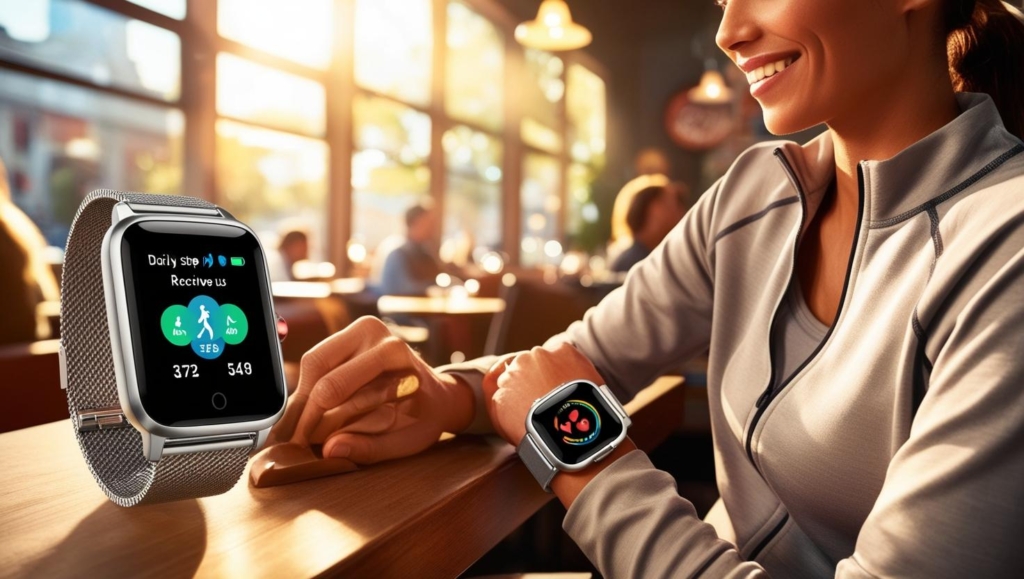
Calls, replies, music control, contactless payments and turn-by-turn directions are genuinely convenient — particularly if you run or cycle without a phone. Payments and offline music are the two features people report actually changing their habits.
The trade-off is attention. A tracker you glance at twice a day supports focus; a watch that vibrates for every message can quietly undo it. That’s a personality question more than a spec question, and it’s worth being honest with yourself about before spending.
Price: what each tier actually buys
| Tier | Typical price | What you get |
|---|---|---|
| Budget tracker | $40–$90 | Steps, heart rate, sleep, long battery. Enough for most beginners. |
| Premium tracker | $100–$180 | Adds built-in GPS, ECG/SpO2, better sleep analysis. |
| Mainstream smartwatch | $250–$450 | Full apps, payments, calls, richer health sensors. |
| Sport/rugged watch | $450–$900 | Multi-week battery, training load, mapping, durability. |
| Smart ring | $300–$400 (some with a subscription) | Discreet sleep and recovery tracking, no screen. |
Spending more buys sensors and battery — not motivation. A $60 tracker worn daily beats a $600 watch in a drawer, every time.
The third option nobody mentioned five years ago: smart rings
Rings like the Oura Ring 4, Samsung Galaxy Ring and RingConn have carved out a real niche. They do sleep, resting heart rate, HRV and recovery well, they’re comfortable overnight, and they last for days.
What they don’t do is live workout metrics — no screen, no on-device GPS, weaker during high-intensity training. Plenty of people now wear a ring for recovery and a watch only for workouts. If your goal is sleep and stress rather than pacing intervals, a ring may suit you better than either device here.
So which should you buy?
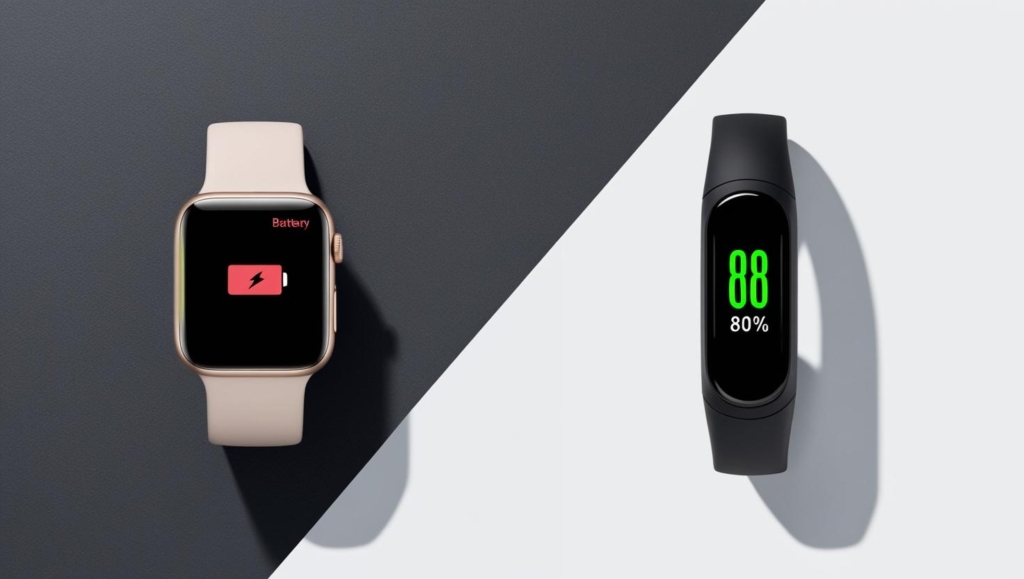
- Choose a fitness tracker if you want the habit without the distraction, value week-long battery, care most about sleep and daily movement, or you’re buying your first device.
- Choose a smartwatch if you train outdoors and want GPS and music without a phone, want payments and notifications on your wrist, or you’re chasing structured training data like VO2 max and training load.
- Choose a smart ring if sleep and recovery are the point, and you’d rather not wear a screen to bed.
Still deciding on specific models? Our guide to the best wearable health and fitness gadgets breaks the current field down device by device.
Making the data actually count
Whichever you pick, the device only earns its price if the numbers change a decision. Pick one metric to act on for a month — steps, sleep duration or resting heart rate — and ignore the rest of the dashboard. That’s the difference between tracking and improving.
Then turn it into a plan: set your calorie target with the TDEE calculator, split it with the macro calculator, and see everything else on our free fitness tools page.
Frequently asked questions
Are fitness trackers accurate for calories burned?
Not particularly. Calorie burn is the least reliable figure any wearable produces, because it’s modelled from heart rate, movement and your profile rather than measured. Treat it as a rough relative signal, and never “eat back” the number literally.
Do I need a smartwatch to lose weight?
No. Weight loss comes from a sustained calorie deficit; a wearable only helps by making your activity and habits visible. A basic tracker — or an honest food log — does that job.
Is a chest strap still more accurate than a watch?
For heart rate during hard or variable efforts, yes. Chest straps read electrical signals rather than light through skin, so they handle intervals and lifting far better. Most watches pair with one if you want both.
Smart ring or smartwatch?
Ring for sleep, recovery and comfort; watch for live workout data and navigation. They overlap less than you’d expect, which is why some people wear both.
Sources
- Harvard Health — accuracy and usefulness of wearable devices
- Mayo Clinic — heart-rate monitoring and activity tracking