
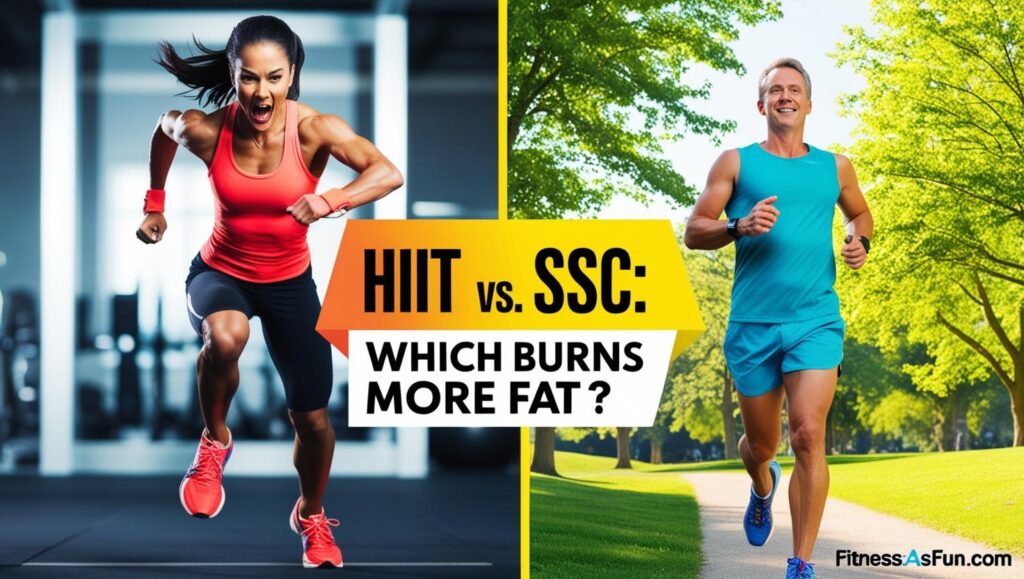
Fat loss isn’t just about sweating—it’s about strategy.
Two of the most popular methods in the cardio world are High-Intensity Interval Training (HIIT) and Steady-State Cardio (SSC). Both have their fans, both torch calories, but when it comes to pure fat burning, which one truly delivers better results?
Let’s break it down.
The Basics: What You’re Actually Doing
HIIT (High-Intensity Interval Training)
- Alternates between short bursts of intense effort and periods of rest or light activity.
- Example: Sprint 30 seconds, walk 90 seconds, repeat for 20 minutes.
- Time-efficient and brutal.
Steady-State Cardio
- Involves consistent, moderate effort over an extended time.
- Example: Jogging at a constant pace for 45 minutes.
- Easier on the joints and beginner-friendly.
Both improve heart health, burn calories, and build endurance. But the way they target fat differs.
The Fat-Burning Science
Let’s compare how both approaches affect fat loss:
1. Caloric Burn During Workout
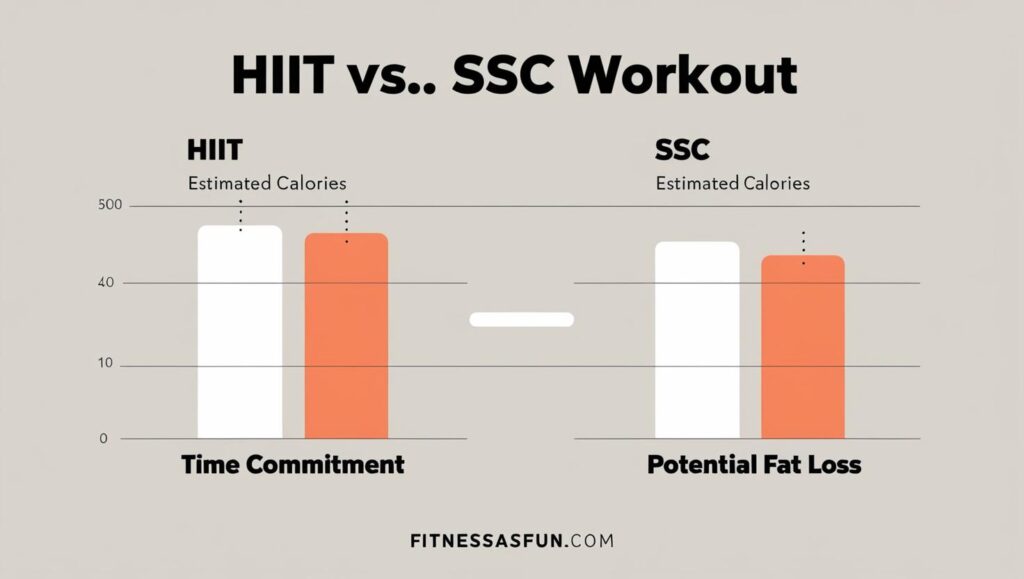
- HIIT: Burns more calories per minute because of intensity.
- SSC: Burns fewer calories per minute but goes longer.
✅ Winner: HIIT (per minute), SSC (over longer duration)
2. Afterburn Effect (EPOC)
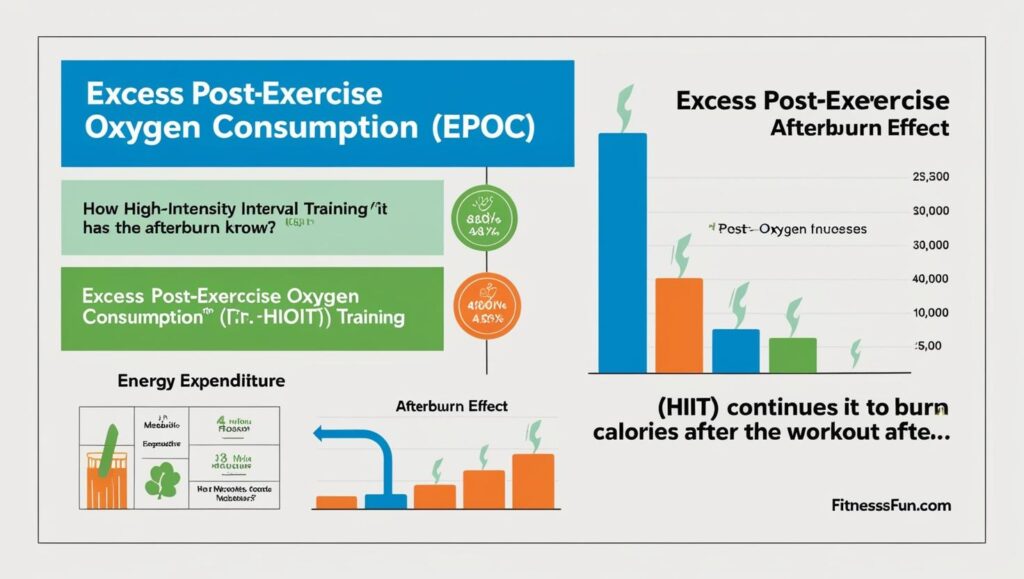
Excess Post-Exercise Oxygen Consumption (EPOC) means your body keeps burning calories even after the workout ends.
- HIIT: Triggers a significant afterburn that can last up to 24 hours.
- SSC: Minimal EPOC.
✅ Winner: HIIT
3. Fat as Fuel
- SSC: Primarily uses fat for fuel during the workout.
- HIIT: Mostly uses glycogen, but shifts to fat-burning post-workout.
✅ It’s a draw. HIIT burns fat after, SSC during.
4. Hormonal Impact
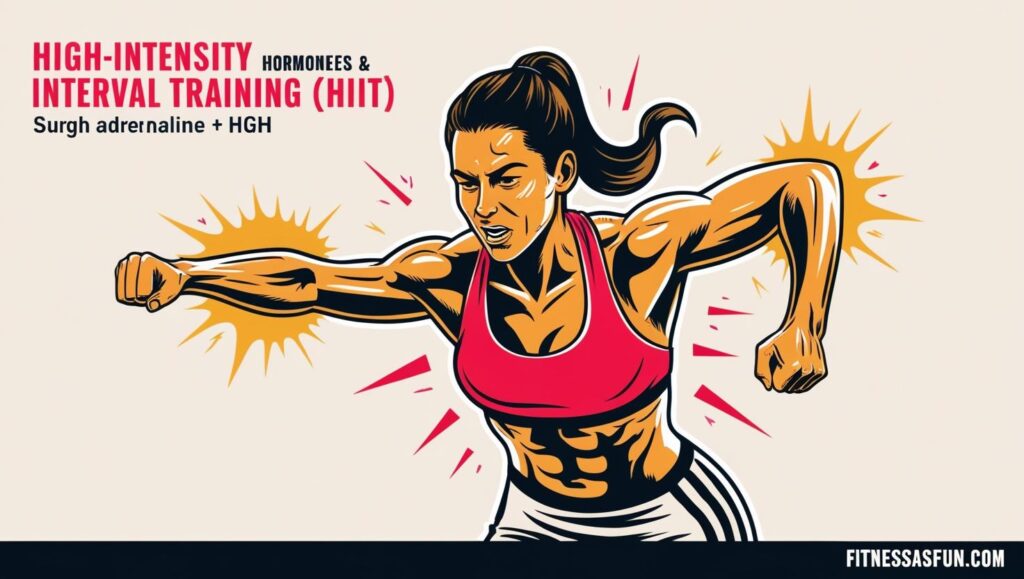
- HIIT: Boosts fat-burning hormones like HGH and adrenaline.
- SSC: Has a milder hormonal effect.
✅ Winner: HIIT
5. Muscle Preservation
Muscle burns more calories at rest.
- HIIT: Helps preserve or even build lean muscle.
- SSC: Can lead to muscle loss if overdone or done with a caloric deficit.
✅ Winner: HIIT
My Personal Experience: 3 Weeks, Two Approaches
I ran my own experiment.
- Week 1 & 2: 5x/week of 30-minute SSC (moderate pace jog)
- Week 3: 3x/week HIIT (20 minutes/session)
Results?
- SSC: Felt calming, but I had to push to burn 300-350 calories per session.
- HIIT: Brutal but quick. Burned nearly 400 calories/session and felt energized for hours.
My takeaway? HIIT wins for efficiency. But SSC has its place when I need a recovery day.
So, Which One Should You Do?
Choose HIIT if:
- You’re short on time
- You want fast results
- You enjoy pushing limits
- You’re already somewhat fit
Choose Steady-State Cardio if:
- You’re a beginner
- You’re recovering or managing stress
- You prefer longer, calmer sessions
- You’re pairing it with strength training
Final Verdict
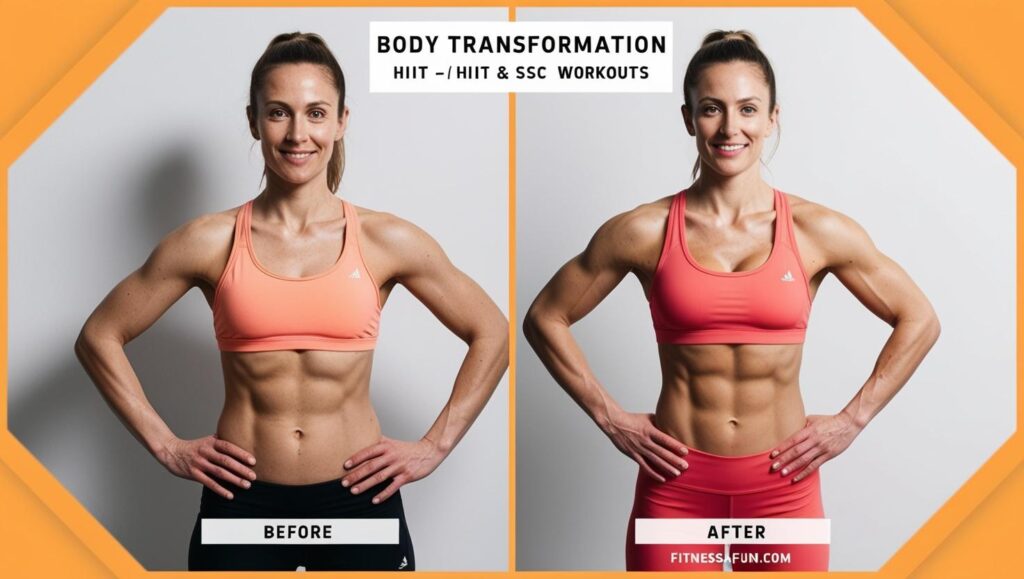
If your goal is maximum fat burn in minimal time, HIIT is superior.
But SSC still plays a critical role in recovery, endurance, and mental reset.
The smart move? Mix both. Alternate HIIT and SSC across the week to hit all angles—fat loss, recovery, and sustainability.
FAQs
Q: Can beginners try HIIT?
Yes, but start with low-impact intervals. Avoid jumping in too hard—your joints will thank you.
Q: Is it okay to do HIIT daily?
Not recommended. Stick to 2–3 sessions per week to allow recovery.
Q: Will SSC make me lose muscle?
Only if done excessively with poor nutrition. Balance is key.
Q: What if I hate running?
No problem. You can do HIIT with cycling, rowing, swimming—or even bodyweight circuits.
Sources
- Journal of Obesity (2011): HIIT vs. Steady-State for Fat Loss
- ACE Study on EPOC and Caloric Burn
- NSCA Journal: Muscle Preservation and Cardio Modalities
Want to put this into practice? Try our free TDEE calculator and one-rep max calculator. Browse them all on our free fitness tools page.