
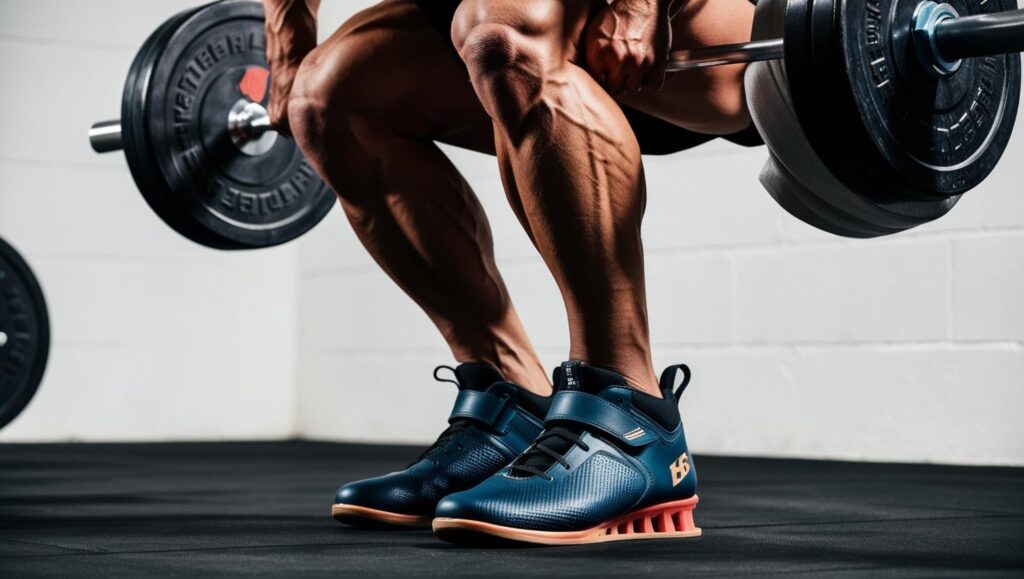
Updated for 2026. You gear up for squats and feel it immediately — pressure through the arch, ankles rolling inward, and a setup that never quite feels solid. If you have flat feet, lifting isn’t only a test of strength. It’s a fight against your own base of support.
The good news: this is one of the few problems in the gym that equipment genuinely solves. The right shoe stops the arch collapsing under load, and the difference in how stable a heavy squat feels is immediate.
What flat feet actually do to your lifting

Flat feet (fallen arches) mean the foot lacks the natural curve that spreads load across the base. Under a loaded barbell that matters, because the arch is the first thing to give way.
When the arch collapses inward — overpronation — it starts a chain reaction up the leg: the ankle rolls in, the knee follows and drifts inside the foot, and the hip compensates. What you feel is a squat that wanders, knees caving on the way up, and a vague sense that you can’t “grip” the floor.
So a shoe for flat feet has two jobs, and they are not the same thing:
- A rigid, non-compressible sole so the platform under you doesn’t squash and shift.
- Arch support or the room to add it so the foot itself doesn’t collapse inward.
Plenty of shoes do the first and ignore the second. That’s why removable insoles matter so much for flat-footed lifters — they let you pair a stiff platform with the arch support your foot needs.
Top weightlifting shoes for flat feet
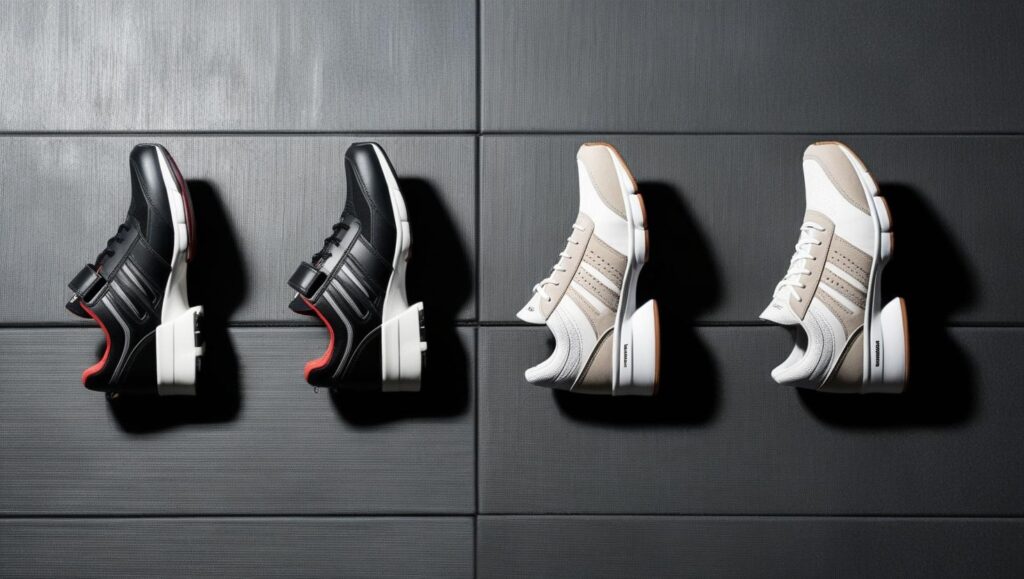
1. Nike Romaleos 4 — best for heavy squats
A wide, planted base and a genuinely rigid sole. The key feature for flat feet is the removable insole, which means you can drop in orthotics without losing the shoe’s structure.
Trade-off: stiff and heavy — excellent under a bar, clumsy for anything dynamic.
2. Reebok Legacy Lifter III — best for Olympic lifts
Dual midfoot straps give real lockdown, which stops the foot sliding inside the shoe as the arch flattens. The higher heel helps you stay upright in front squats and cleans.
Trade-off: among the most expensive options, and heavier than it looks.
3. Adidas Adipower III — best all-rounder
A firm TPU midsole that resists collapse under load, in a lighter package than the Romaleos. A sensible default if you squat and press but don’t specialise.
Trade-off: a short break-in period, and a narrower fit than the TYR.
4. TYR L-1 Lifter — best for wide or flat feet
The roomiest toe box of the group. If your flat feet also run wide, this is usually the most comfortable option straight out of the box, and it has become a favourite in powerlifting and CrossFit gyms alike.
Trade-off: availability can be patchy compared with the big brands.
5. Nordic Lifting — best budget pick
Usually well under $100 with a reinforced heel and a solid synthetic build. Not as refined as the premium options, but it does the one thing that matters: it doesn’t compress.
Trade-off: heavier, and the finish won’t last as long under heavy use.
The mistake almost everyone makes: wearing them for deadlifts
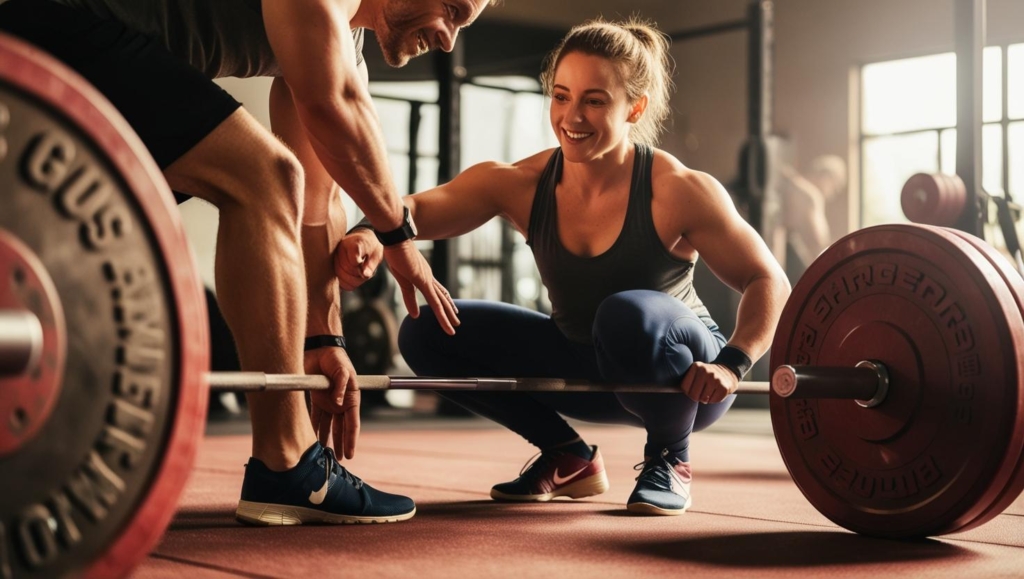
Weightlifting shoes have an elevated heel — typically around 19–22mm. That heel is brilliant for squatting: it lets you reach depth with a more upright torso and less ankle mobility.
For conventional deadlifts it works against you. A raised heel lifts the bar further off the floor, lengthening the pull for no benefit, and shifts you forward onto the toes at exactly the point you want to be driving through the whole foot.
For deadlifts you want the opposite: something flat, thin and firm. Most lifters with flat feet do best in a flat, hard-soled shoe with an orthotic insert — support without the heel lift. Buying one pair for squats and one flat pair for pulls is a more useful spend than upgrading to a pricier squat shoe.
Getting the fit right
- Size for a snug midfoot, not a tight toe. Lockdown across the arch is what stops the foot rolling; your toes should still be able to splay.
- Check the insole comes out before you buy. If you use orthotics and it doesn’t, the shoe is a non-starter.
- Try them late in the day, when feet are at their largest — flat feet spread more than high arches.
- Don’t size up for width. A longer shoe puts the arch support in the wrong place. Choose a wider model instead.
Shoes help — but strengthen the foot too

Footwear manages the symptom. Building the foot addresses the cause, and it costs nothing. Add a few minutes to your warm-up:
- Short-foot drill (arch doming) — draw the ball of the foot toward the heel without curling the toes. Hold, then release.
- Calf raises, including a slow lowering phase, to build the tissue supporting the arch.
- Toe splay and towel curls to wake up the small muscles of the foot.
- Barefoot warm-up sets at light weight, so the foot learns to stabilise without help.
If you have persistent pain rather than discomfort, see a podiatrist before buying anything. Custom orthotics fitted to your foot will outperform any off-the-shelf shoe.
Frequently asked questions
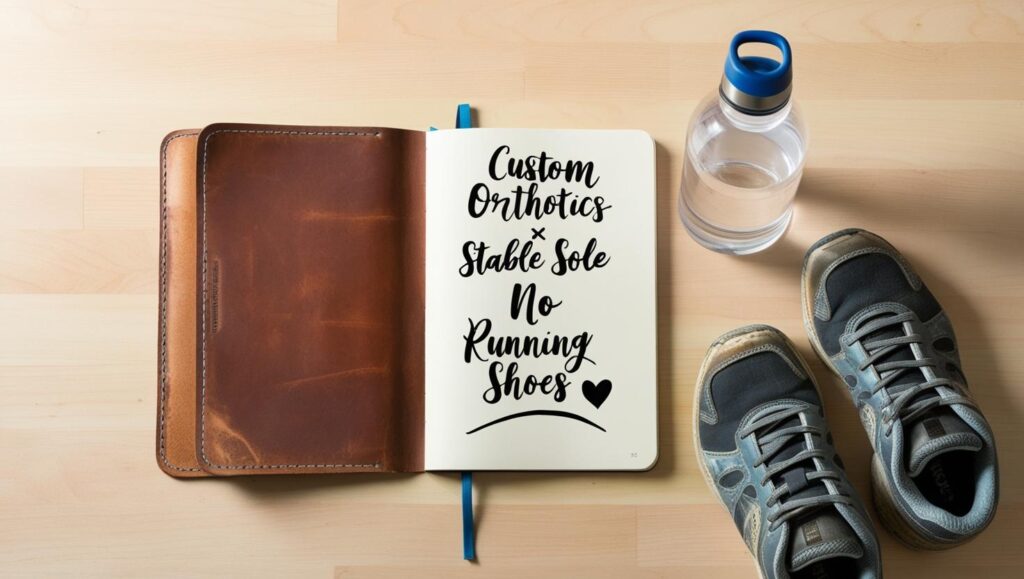
Can I lift in running shoes if I have flat feet?
It’s the worst option. Running shoes are built to compress and absorb impact, so under a heavy bar the sole squashes unevenly and your base moves. Even cheap flat shoes are a better choice.
Do I need weightlifting shoes at all with flat feet?
Not necessarily. A flat, firm shoe plus a good orthotic covers most lifters. Dedicated lifting shoes earn their price if you squat often and struggle with depth or ankle mobility.
Will lifting shoes fix my flat feet?
No. They support the foot while you train; they don’t rebuild the arch. Foot strengthening work and, where needed, professional orthotics do that.
What heel height should I look for?
Roughly 19–22mm suits most lifters. Go higher only if limited ankle mobility is genuinely blocking your squat depth.
Working out what the rest of your setup should cost? Compare gear honestly with our price-per-pound calculator, check what fits your room with the home-gym space planner, or see everything on our free fitness tools page.