

You’re sitting calmly when suddenly — thump-thump-THUMP — your heart races or skips. It’s unsettling. It might be stress, caffeine, dehydration… or, in some cases, low magnesium.
Heart palpitations can feel like a fluttering chest or a skipped beat. They have many possible causes, and magnesium deficiency is one that’s relatively common — and, when it’s the cause, often correctable. This guide breaks down the forms of magnesium most associated with heart-rhythm support, how they differ, and how to use them safely.
⚠️ Important: when palpitations are an emergency
Call emergency services or seek urgent care if palpitations come with chest pain or pressure, fainting or near-fainting, severe shortness of breath, or dizziness — or if they’re sustained, very fast, or new for you. Palpitations can occasionally signal a serious heart condition. This article is general information, not medical advice, and isn’t a substitute for evaluation by a qualified clinician.
Why Magnesium Matters for Heart Health
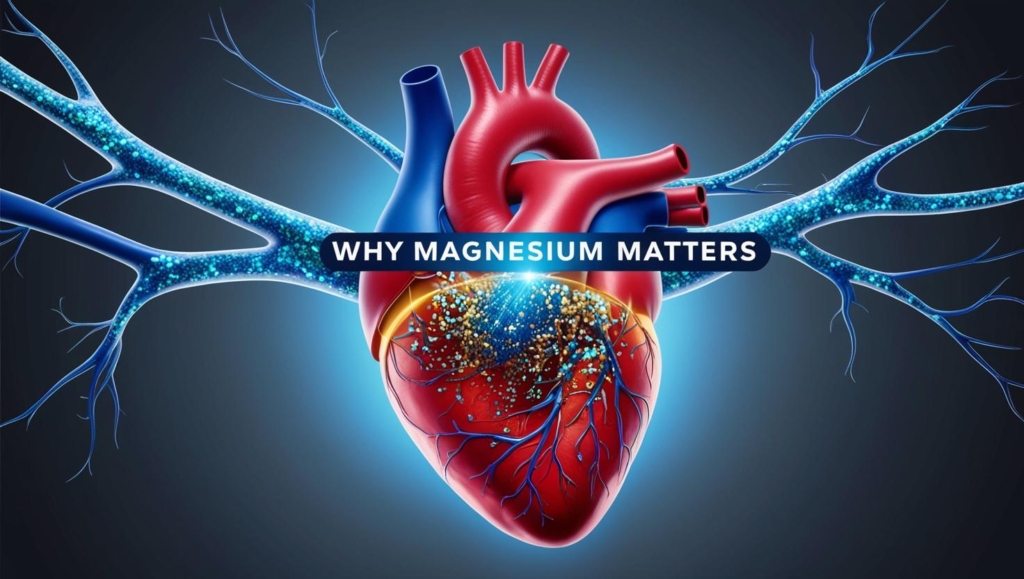
Magnesium is an essential mineral involved in:
- Maintaining a steady heartbeat (it’s a key electrolyte for heart-muscle cells)
- Calming the nervous system
- Supporting electrolyte balance
- Helping regulate blood pressure
When magnesium runs low, some people experience muscle cramps, fatigue, anxiety, and — in some cases — irregular heartbeats. A true deficiency is best confirmed with a clinician rather than self-diagnosed.
Common Signs You Might Be Low on Magnesium
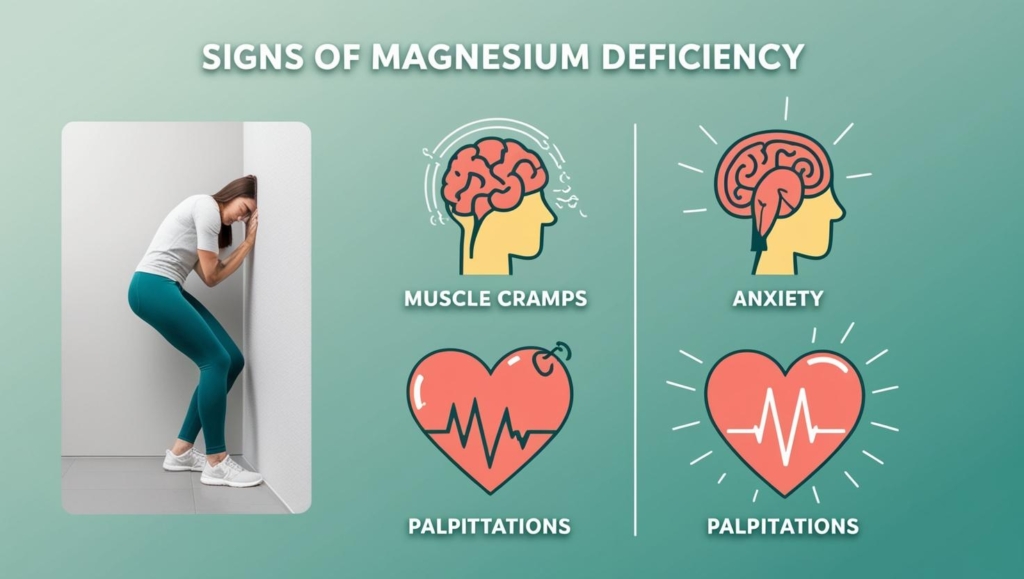
- Frequent palpitations
- Muscle twitches or cramps
- Fatigue or trouble sleeping
- Heightened stress or anxiety
- Tingling or numbness
These symptoms overlap with many other conditions, so they’re a reason to ask your doctor — not a diagnosis on their own.
Best Forms of Magnesium for Heart-Rhythm Support
Different magnesium compounds are absorbed and tolerated differently. These are the forms most often recommended for calm and cardiovascular support.
1. Magnesium glycinate — best for calm & sleep

Well-absorbed and gentle on the stomach. It pairs magnesium with glycine, an amino acid linked to relaxation — which is why it’s a popular choice for stress-related symptoms and night-time use.
Best for: night-time use, stress-related symptoms, sensitive stomachs.
2. Magnesium taurate — often chosen for heart support

Combines magnesium with taurine, an amino acid studied for cardiovascular function. It’s frequently suggested for heart-rhythm support, though the clinical evidence is still limited — talk to your doctor if you have a known arrhythmia.
Best for: people focused on cardiovascular support (with medical guidance).
3. Magnesium malate — best for daytime energy

Combined with malic acid, this form supports muscle relaxation and is often chosen for daytime use because it’s less sedating and may help with fatigue.
Best for: daytime use, muscle tightness, low energy.
4. Magnesium citrate — budget-friendly & easy to find
Widely available and well-absorbed. The trade-off: at higher doses it has a laxative effect, so it’s better suited to lower or occasional dosing.
Best for: occasional use and value; skip if you’re prone to loose stools.
Dosage & How to Take It Safely
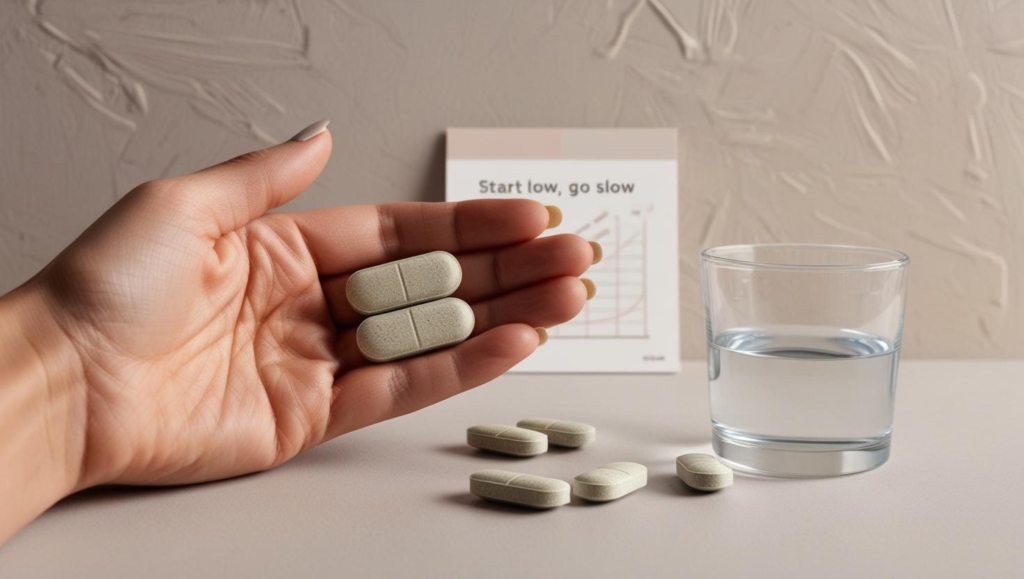
✔️ Many people use 200–400 mg/day of elemental magnesium, often split into two doses — but the right amount depends on you, so confirm with your doctor.
✔️ Note the upper limit for supplemental magnesium is about 350 mg/day for adults (magnesium from food isn’t capped the same way).
✔️ Take with food to improve absorption and reduce stomach upset.
✔️ Space it apart from certain medications (e.g., some antibiotics) and don’t stack it with other supplements unless advised.
Can Magnesium “Cure” Heart Palpitations?
No supplement is a cure. If your palpitations are frequent or worrying, see a cardiologist — they can rule out conditions a supplement can’t fix. That said, for mild, stress- or deficiency-related palpitations, correcting low magnesium may help some people, especially alongside good hydration, sleep, and stress management.
Who Should Be Cautious with Magnesium Supplements
- People with kidney disease (reduced ability to clear excess magnesium)
- Anyone on heart, blood-pressure, or other prescription medications
- People who are pregnant, breastfeeding, or managing a chronic condition
Always check with your doctor or pharmacist before starting a supplement.
Quick Recap
| Magnesium type | Best for | Bonus benefit |
|---|---|---|
| Glycinate | Stress-related symptoms | Calming, good for sleep |
| Taurate | Cardiovascular support | Pairs with taurine |
| Malate | Daytime energy & muscle | Less sedating |
| Citrate | Budget & availability | Well-absorbed |
Frequently Asked Questions
How long until magnesium helps with palpitations?
If low magnesium is the cause, some people notice changes within a few weeks of consistent use. If nothing improves — or symptoms worsen — stop and see a doctor.
Can I just eat more magnesium-rich foods instead?
Often, yes. Leafy greens, nuts, seeds, legumes, whole grains, and dark chocolate are excellent sources, and food-based magnesium doesn’t carry the same supplemental upper limit.
Is it safe to take magnesium every day?
For most healthy adults, staying within recommended amounts is generally considered safe — but if you have kidney issues or take medications, confirm with your doctor first.
Final Thoughts: Listen to Your Heart

Palpitations can be your body’s cue to slow down and take better care of yourself — and for some people, magnesium is part of that picture. Choose the right form, stay consistent, pair it with good sleep and hydration, and — most importantly — loop in a professional if anything feels off.
Sources
- National Institutes of Health — Magnesium Fact Sheet for Health Professionals
- American Heart Association — heart.org
Make it concrete — use our free one-rep max calculator and home-gym space planner. Browse them all on our free fitness tools page.