

Updated for 2026. “Isn’t strength training dangerous after 50?” It’s the first thing most people ask when a doctor suggests lifting weights for joint pain, fatigue or bone density.
The evidence points firmly the other way. Resistance training is one of the most protective things you can do in your fifties and beyond — not despite your age, but because of it.
Here’s why it matters more after 50, how to start safely, and what a realistic first month looks like.
Why it matters more after 50
You lose muscle by default
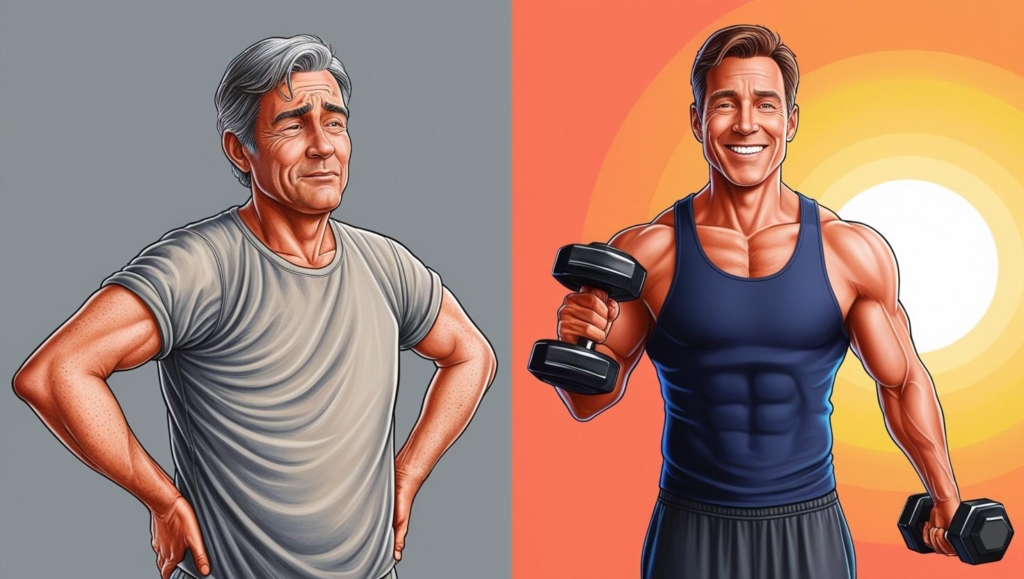
From around age 30 adults gradually lose muscle mass each decade, a process called sarcopenia, and the rate tends to accelerate after 60. That loss isn’t only about strength — muscle underpins balance, mobility, blood-sugar handling and how easily you recover from illness or a fall.
Resistance training is the most direct countermeasure available. It can slow the decline substantially and, in previously untrained people, reverse a meaningful part of it.
It loads your bones
Bone responds to mechanical stress. Loading it through resistance work is associated with better bone mineral density, which is particularly relevant after menopause when bone loss speeds up. Walking helps; loaded strength work helps more, because bone adapts to the forces placed on it.
It protects independence
This is the outcome that matters most and gets discussed least. Standing from a chair, carrying shopping in both hands, catching yourself when you stumble, managing stairs with a suitcase — these are strength tasks. Training keeps them easy for longer.
Before you start
Talk to your doctor first if you have heart conditions, uncontrolled blood pressure, osteoporosis, a recent injury or surgery, or joint replacements. This article is general information, not medical advice, and a short conversation can shape your programme sensibly rather than ruling it out.
If you can, book one or two sessions with a trainer experienced with older adults. Learning a hip hinge properly at the start saves months of avoidable back irritation.
A realistic beginner plan

Two sessions a week is the sweet spot for beginners — enough to drive adaptation, few enough to recover from and actually sustain. Aim for around 2 sets of 8–12 repetitions per exercise, stopping a couple of reps short of failure.
Weeks 1–4: bodyweight and bands
- Sit-to-stand — stand from a chair without using your hands. The single most transferable exercise on this list.
- Wall or counter push-ups — the higher the surface, the easier.
- Glute bridges — hips and lower back, with no spinal loading.
- Step-ups onto a low, stable step.
- Bird-dog — core and balance without floor-to-ceiling transitions.
- Band rows — pulling work to offset a lifetime of sitting forward.
Weeks 5–12: add load
This is the step most people skip, and it’s where the results live. Once an exercise feels comfortable for 12 reps, add resistance — dumbbells for the squat and press, a heavier band for rows, a higher step.
Progression doesn’t have to mean heavier. An extra rep, a slower lowering phase, a deeper range of motion or one more set all count. But the work must get harder over time or your body has no reason to adapt.
Protein matters more than you think
Older adults respond less efficiently to dietary protein than younger ones — the same meal triggers less muscle-building signal. In practice that means protein intake needs to be higher after 50, not lower, and spread across the day rather than loaded into one evening meal.
Training hard on inadequate protein is the most common reason people over 50 see disappointing results. Work out your own numbers with our TDEE calculator, then split them using the macro calculator — it lets you set a higher protein target directly.
Recovery is part of the programme
Recovery slows with age, which is an argument for spacing sessions — not for training less hard. Leave at least a day between strength sessions, prioritise sleep, and expect some muscle soreness for 24–48 hours after a new movement. That’s normal adaptation.
Sharp joint pain during a movement is not. Stop, and get it looked at rather than training through it.
Three myths worth dropping

“I’m too old to start.” Strength gains have been demonstrated in adults well into their eighties and nineties. Beginners typically see the fastest relative progress of anyone.
“It’ll wreck my joints.” Done with sensible load and technique, resistance training strengthens the muscles and connective tissue supporting a joint. It’s frequently prescribed for arthritic knees rather than avoided because of them.
“I’ll get bulky.” Substantial muscle gain requires years of hard training and a calorie surplus. What most people over 50 actually get is firmer, stronger and more capable.
Frequently asked questions
How often should someone over 50 lift weights?
Two sessions a week covering the whole body suits most beginners. Three works once you’ve built a base, provided you leave recovery days between them.
Do I need a gym?
No. Bodyweight and resistance bands take you a long way, and a couple of adjustable dumbbells cover most of what follows. Planning a home setup? Our space planner shows what fits your room.
How soon will I notice anything?
Strength and daily-task improvements often appear within 4–6 weeks — early gains come largely from your nervous system learning the movements. Visible changes take longer.
Is it safe with arthritis or osteoporosis?
Frequently yes, and often beneficial — but the exercise selection matters, particularly with osteoporosis where certain spinal movements are usually avoided. This is exactly the case for getting individual medical guidance first.
Sources
- National Institute on Aging — exercise and physical activity for older adults
- Harvard Health Publishing — strength training and healthy ageing